How to Wheelie (Grau) in Street Wheelie Brasil Online
Balance point, throttle feathering, recovery, and street hazards — the full grau tutorial.
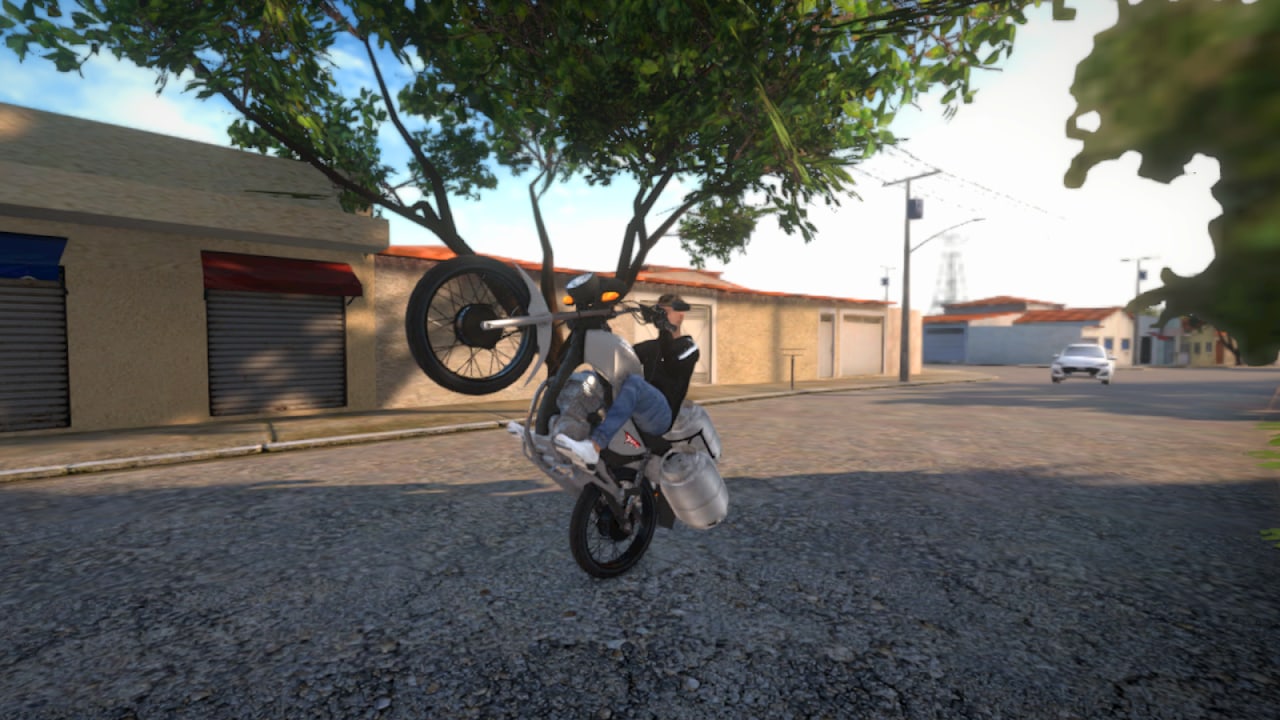
In Brazil, a motorcycle wheelie is a grau. Street Wheelie Brasil Online builds its identity around that culture: realistic lift physics, open-world streets, and the social flex of holding a clean line while friends ride nearby. This guide teaches the skill from first lift to street-ready control. If you have not finished onboarding, skim Getting Started first, then come back.
Villa Games Group also shipped 157 Grau: Online RP, and players naturally compare SWB to Projeto Grau 2 and MX Grau. Those comparisons are about vibe and ambition. Your muscle memory still has to be built inside this physics sandbox.
What “realistic wheelie physics” actually demands
Arcade racers often treat a wheelie as a binary toggle. Realistic systems treat it as a moving equilibrium. The bike rotates around a balance region near the rear contact patch. Your job is to keep the center of mass oscillating gently around that region using throttle — and, when available, brake and body/lean inputs shown on your Controls layout.
Think in three zones:
- Too low: front tire hunting for asphalt; add a touch of throttle.
- Balance band: front floats; micro-correct only.
- Too high: loop risk; cut gas immediately and prepare a recovery.
You will feel the band more than you will see a perfect UI meter. Early access UIs may add helpers later; do not wait for them.
Setup before the first serious attempt
- Choose a long, flat stretch with minimal traffic and no sudden elevation changes.
- Confirm stable FPS. Frame dips make feathering impossible — use Performance Settings if the phone heats up.
- Start from a rolling pace, not a panicked clutch dump from standstill (unless you are specifically practicing clutch-up style launches the build supports).
- Clear the camera: if the default view fights you, adjust once, then stop fiddling mid-wheelie.
Bike choice matters later. Starter machines teach honesty. When you unlock louder builds or the Tiger Sport 660, revisit this drill because power delivery changes how fast you enter the high zone. Cross-check the Tier List and Customize Motorcycle when power parts alter the lift.
Throttle feathering — the core mechanic
Feathering means tiny, rhythmic changes instead of floor-or-coast. Procedure for a training lift:
- Roll at a steady medium speed.
- Ease into enough throttle to lighten the front — do not jab.
- As the nose rises through the low zone, already plan to roll off slightly before the peak.
- Enter the balance band with less throttle than you used to lift.
- Correct with pulses: short add, short reduce, never a held panic twist.
If you overshoot into the high zone, releasing throttle is step one. Step two is whatever rear-brake or balance control the current build exposes — practice that recovery in isolation so it becomes reflex. Many riders loop because they freeze on full gas while staring at the skybox.
Finding your personal balance point
Spend a session doing ten-second goals, not city-length graus. Count aloud: lift, stabilize, hold to ten, set down softly. Soft set-downs teach you the bottom of the band. Slamming the front trains the wrong recovery.
Signs you found the band:
- Corrections get smaller over time.
- You can glance at the road ahead without immediately tipping.
- Speed stays roughly stable instead of surging and collapsing.
Signs you are faking it with luck:
- Every save requires a huge throttle stab.
- You only succeed in a straight empty lane and fail the moment a curb appears.
- You cannot explain what your thumb did on the last success.
Record a short clip from your phone’s screen recorder if needed. Watching yourself often reveals that you hold full throttle two beats too long.
Recovery when things go wrong
Front dropping too fast: add a measured pulse of throttle; avoid a square-wave stab that launches you into a loop.
Loop incoming: cut throttle; apply the recovery input your layout provides; accept a failed attempt over a crash that costs repair cash from the Jobs & Money loop.
Landing crooked: straighten with gentle steering only after the front is down. Turning hard while the front is light is how you high-side into props.
Speed too low in the wheelie: you will sink out of the band. Either set down and rebuild speed or add throttle carefully if you still have runway.
Speed too high: hazards arrive faster than your correction rate. Longer is not always better on day three.
Street hazards that punish greedy pulls
Open-world Brazilian streets are content, not a closed wheelie gym. Train your eyes to scan:
- Speed bumps and driveway lips that kick the rear and spike your angle.
- Wet-looking patches, sand, or painted lines that change grip mid-hold.
- Traffic that forces a swerve while the front is up.
- Camber and crowned roads that slowly walk you toward a gutter.
- Tight plaza furniture and parked cars that end a “perfect” line.
Rule of thumb: if you cannot name the next hazard before you lift, you are not ready for that street. Pick a quieter block. Online sessions with friends are excellent for motivation and terrible for learning fundamentals — host a private practice mindset even when others are around.
Progressive practice plan
Session A — Lift literacy: twenty short lifts, focus on soft landings only.
Session B — Ten-second holds: ignore distance; chase stable angle.
Session C — Moving corrections: hold while making tiny lateral adjustments.
Session D — Hazard integration: introduce one known bump or gentle curve per run.
Session E — Social ride: apply the skill online without chasing every dare.
Between sessions, earn cash with jobs so crashes do not wipe your garage plans, and keep an eye on Updates in case physics tuning shifts during early access.
Power, exhaust, and why feel changes after upgrades
Performance parts and aggressive exhaust setups change how quickly torque arrives. A bike that was docile on the starter map can leap into the high zone after a pipe and engine touch. That is why customization and wheelie skill are linked. After any major garage change, repeat Session A for ten minutes before you flex in a busy avenue.
Community chatter already names machines like the Tiger Sport 660 and wishlist energy for KTM 390 or CG160-style rides, plus ronco personality from different pipes. None of that replaces throttle discipline.
Mindset: grau as craft, not spam
The fantasy is Brazilian street culture — style, sound, and control. Spamming accidental loops is noise. A short, stable, intentional wheelie that ends where you chose looks better and teaches more. When you can place the front tire down on a mark you picked before the lift, you are ready to chain longer runs and to help friends without coaching them into crashes.
For bike-specific feel on the showcase machine and for taking clean holds into lobbies, continue with the Tiger Sport 660 guide and Online Multiplayer. Return to the Guides Hub when you want the next topic, or jump straight into money and garage pages once the balance band feels boring. Boring means mastery is close.
Frequently Asked Questions
Quick answers about Street Wheelie Brasil Online.
What is a grau in Street Wheelie Brasil Online?
Grau is Brazilian slang for a motorcycle wheelie. The game centers realistic wheelie physics inside a Brazilian-culture open world.
Why do I keep looping backward?
You are carrying too much throttle into the high zone. Cut gas earlier, practice shorter lifts, and drill recovery inputs on a flat empty street.
Should I learn wheelies in online multiplayer?
Learn the balance band solo first. Use online sessions to enjoy the skill after you can recover without panicking.
Do bike upgrades change wheelie feel?
Yes. Power and exhaust changes can raise the front faster. Re-practice short lifts after major garage upgrades.
How long should a beginner hold a wheelie?
Aim for clean ten-second holds before chasing distance. Soft landings matter more than length early on.
Where can I read about controls for throttle and brake?
See the Controls guide for mobile touch habits, and Getting Started for the full day-one plan.